

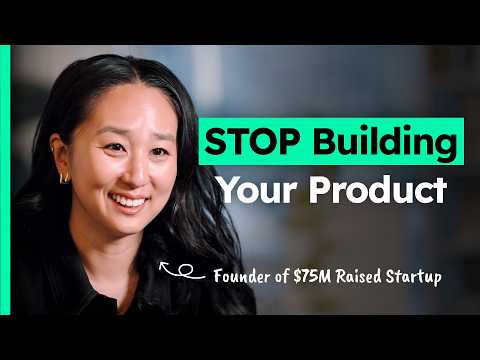
In a recent YouTube video, Shensi Ding shared powerful insights on what really drives success in the startup world. According to her, it’s not about having a brilliant idea—it’s about executing solid research, truly understanding the market, and establishing a strong foundation before writing any code.
Shensi drew from her personal experience of raising $75 million and scaling Merch across three major cities to highlight the importance of execution. She stressed that the idea of a groundbreaking concept leading to success is a myth. The startup world is full of companies with “brilliant” ideas that failed because they didn’t do the hard work of research and execution first.
For Shensi, the real secret to success lies in the unglamorous groundwork done before you even begin building.
The Power of Pre-Launch Research
I recently watched a YouTube video with Shensi Ding, and she shared some insightful advice about the importance of thorough preparation before launching a business. She mentioned how she and her co-founder spent 6 to 9 months conducting user research before leaving their jobs, which might seem like a lot, but it paid off in the long run.
They dove deep into understanding:
– Existing competitors in the market
– Previous attempts at solving similar problems
– Reasons why those attempts failed
– What potential customers truly needed and were willing to pay for
– Market gaps and new opportunities
This kind of in-depth research helped them define their unique value proposition. Shensi also emphasized that having a completely original idea is rare—what really matters is how well you execute and improve on existing solutions.
The Reality of Customer Acquisition
Even after building our product in stealth mode for over a year, customers didn’t magically appear when they launched. The early days were filled with constant outbound sales efforts, often scheduling calls from 10 AM to 9 PM. While exhausting, this period proved invaluable for several reasons:
- We learned exactly what questions potential customers would ask
- We could test different pitches and measure responses
- We developed a deep understanding of customer concerns
- We created a replicable sales process for future team members
Building a Sustainable Organization
Creating a billion-dollar company requires more than just a great product – it needs teams that can operate autonomously at scale. The transition from individual contributors to self-sufficient teams is one of the most challenging aspects of scaling a startup.
Each manager must successfully lead their team while coordinating cross-functionally with other departments. This transformation doesn’t happen overnight, but it’s essential for long-term success.
The Reality of Co-Founder Relationships
Finding the right co-founder is crucial, but the dynamics can be complex. Shensi and their co-founder were friends from college, and their partnership works because they have complementary skills. The co-founder is an exceptional software engineer and people leader, while the individual brings a broader range of skills in coding, sales, and financial planning.
However, a co-founder relationship changes everything. It’s like having a child together, the company becomes the central focus, fundamentally altering the friendship. While they still enjoy working together, their relationship has evolved into something far different from their original friendship.
Finding Support in the Journey
The founder’s journey can be incredibly isolating, but building a network of peer founders has been crucial for maintaining perspective. Having a group of fellow founders to share challenges with – from difficult customers to personal struggles – helps normalize the difficulties of the startup journey.
Every founder faces challenges, and acknowledging this universal truth makes the journey more manageable. Creating these authentic connections with other founders can be vital for maintaining resilience through difficult times.
Frequently Asked Questions
Q: How long should you research before launching a startup?
While there’s no fixed timeline, spending several months on market research and customer validation is recommended. The key is gathering enough data to validate your assumptions and understand the competitive landscape thoroughly.
Q: What makes a successful co-founder relationship?
Successful co-founder relationships typically combine complementary skills, mutual trust, and aligned values. It’s essential to have clear communication and understanding that the relationship will evolve as the business grows.
Q: How do you know if you’ve found product-market fit?
Product-market fit often becomes evident through customer behavior and feedback. Key indicators include strong customer retention, organic growth through referrals, and customers willing to pay for your solution.
Q: What’s the best way to approach early sales?
Focus on high-touch personal outreach and be prepared for numerous conversations. Use these early interactions to refine your pitch, understand common objections, and document the sales process for future team members.
Q: How do you build a support network as a founder?
Connect with other founders at a similar stage in their journey, join founder communities, and be willing to share both successes and challenges. Building authentic relationships requires vulnerability and openness about the difficulties you’re facing.


