
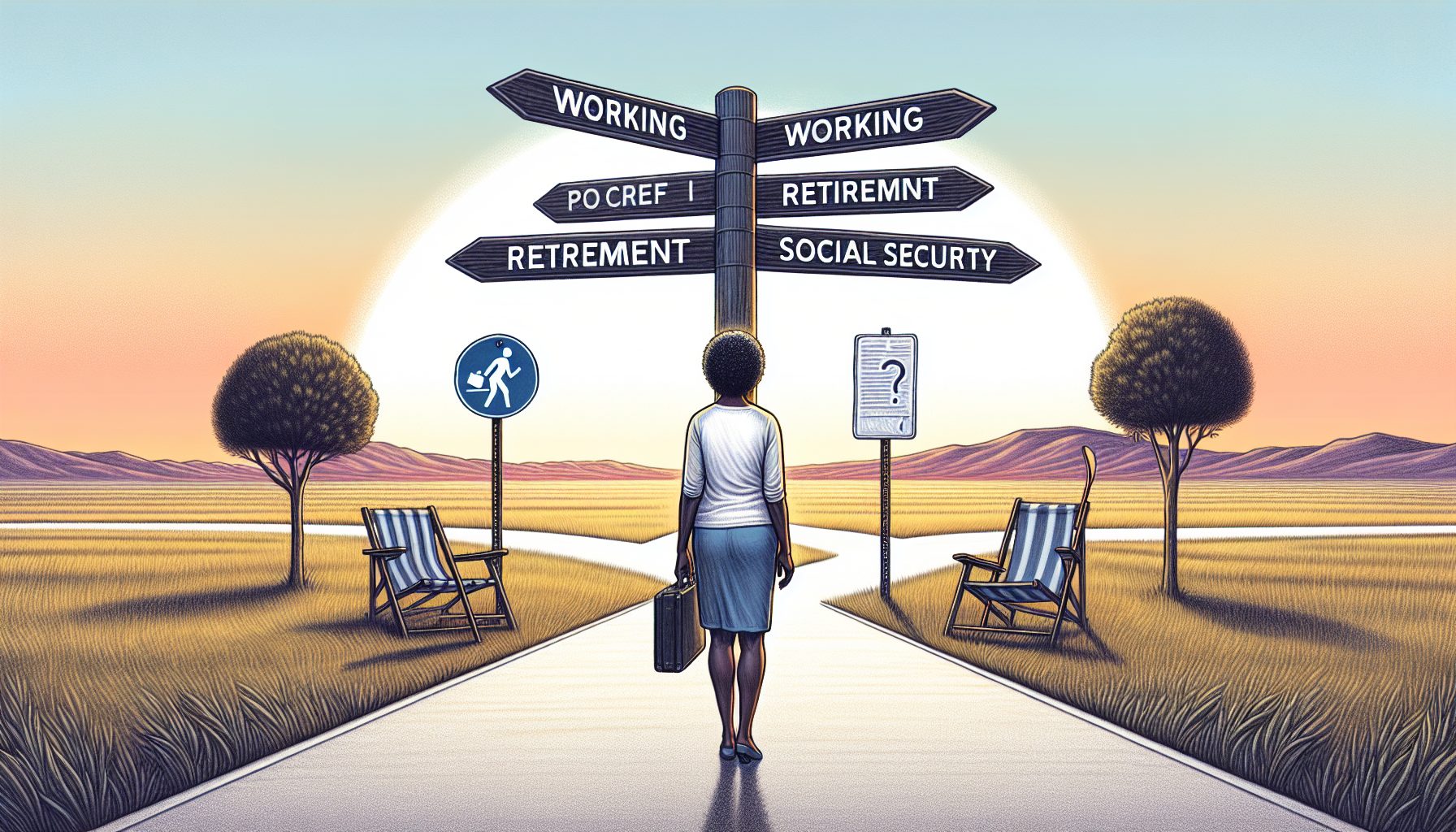
Identifying a parallel with the 1940s song “Don’t mess with Mr. In-between”, Social Security’s structure has a similar equivalent at the age of 65. Known as the ‘Mr. In-between’ age, about 13% of Americans started claiming their Social Security at this specific age in 2022.
Early retirement at 62 results in a reduced monthly benefit, while waiting until the Full Retirement Age (FRA) of 67 gives a higher monthly pension. The in-between age of 65 provides more benefits than retiring at 62, but not the full benefits attained at FRA.
Social Security Administration calculates benefits using the employee’s 35 years of top earnings. Early retirement results in decreased benefits, while delayed retirement past FRA results in increased benefits. This is known as delayed retirement credits. The system adjusts for individuals with less than 35 years of contributions.
Projections show that after 2024, those who start their Social Security at 65 would receive approximately 86.67% of the primary insurance amount. This reduction is tied to the program’s ongoing changes in retirement age.
Balancing benefits: Social Security at 65
Like with increasing human longevity, policy adjustments to the system are necessary.
Figures from December 2022 show the average monthly Social Security benefit for a retiree aged 65 was about $1,504.98. Gender disparities exist, with men receiving $1,670.99 a month and women having an average monthly benefit of $1,355.81. These disparities need to be addressed to ensure a fair retirement for all sexes.
On another note, Social Security recipients experienced two cost of living adjustments, a 8.7% increase in 2023 and a 3.2% rise in 2024. These raise the potential of changes to average monthly benefits, average indexed monthly incomes, and primary insurance amounts. The transformation in financial assistance is relevant for Social Security recipients.
Deciding to claim Social Security at 65 has its pros and cons. It can lead to reduced benefits, but this might not impact those with sufficient savings or other income sources. Delaying until full retirement age allows for a higher monthly benefit, but involves more working years. Factors like health status, longevity expectations, and other income sources play a role in this decision.


