
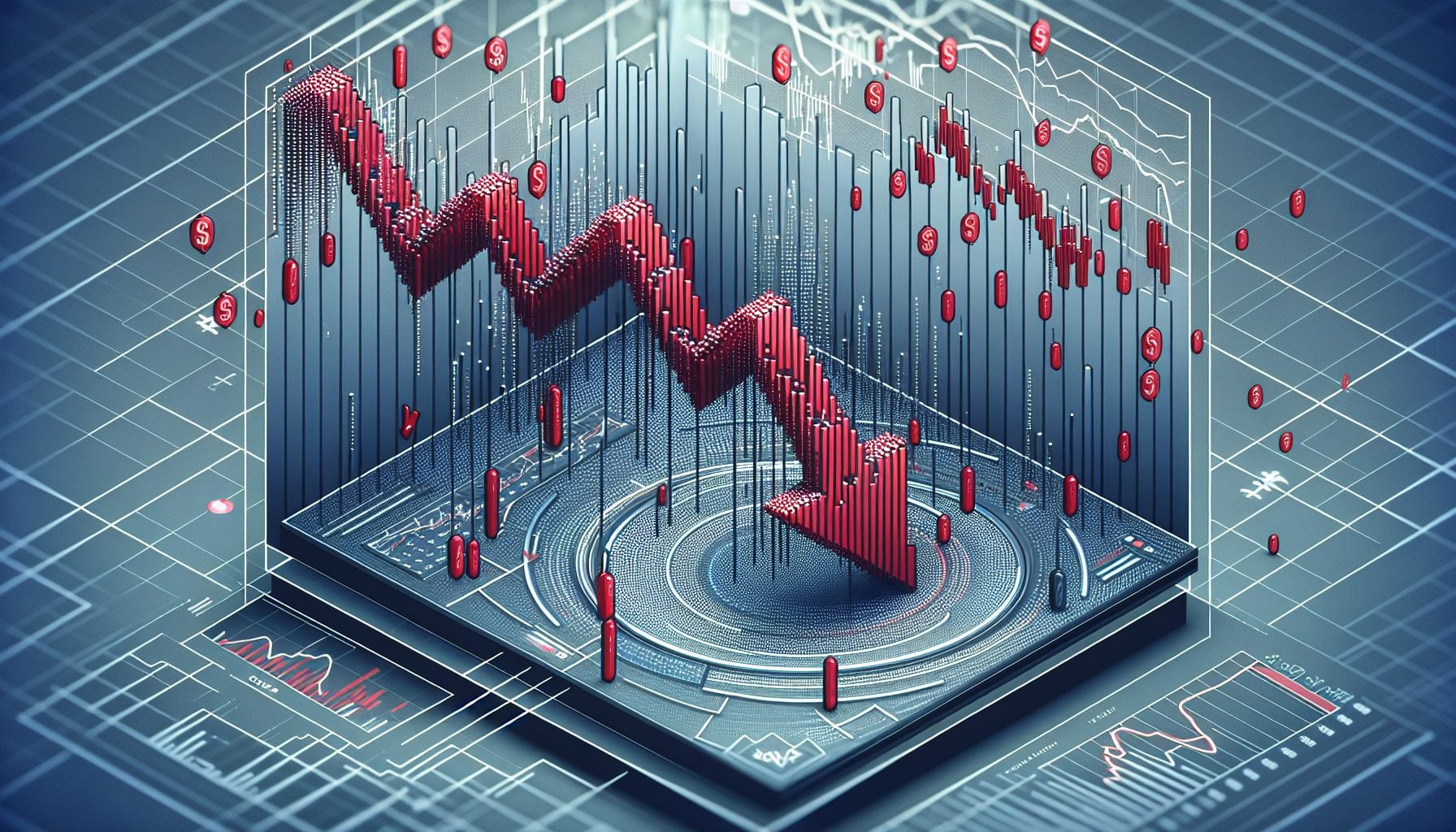
The Australian stock market experienced a significant downturn, with the ASX200 index shedding 141.2 points (-1.7%) to close at 8,168 points. This decline followed the U.S. Federal Reserve’s decision to cut interest rates by 0.25 percentage points, while indicating fewer rate reductions in the coming year due to expectations of prolonged higher inflation. Every sector on the ASX200 lost value, marking the second consecutive day of retreat.
The Australian dollar also plummeted to a two-year low of 62.19 US cents. Wall Street saw substantial losses, with the Dow Jones falling 2.6%, the S&P 500 dropping 3%, and the Nasdaq declining 3.6%. Among the best-performing stocks were Credit Corp Group (+7.65%), Insignia Financial (+4.35%), and QBE Insurance (+2.11%).
The worst performers included Deep Yellow (-12.08%), ANZ (-10.56%), and another unnamed stock (-8.97%). New data revealed that over one million international students are currently enrolled in Australian educational institutions, with shadow ministers criticizing the government for exacerbating the housing crisis.
Asx200 plummets amid fed decision
ANZ’s share price fell by 2.45% following its AGM, and nearly 50% of shareholders voted against the executive pay scheme for the chief executive. The transition to a care economy is expected to put pressure on the Australian government to enhance productivity and develop new industries to offset increasing public demand. New Zealand’s economy shrank by 1% in the September quarter, marking a return to recession, in contrast to Australia’s economic landscape.
Investors wiped almost $50 billion off the ASX, and the Australian dollar plunged to a two-year low as global markets reacted to the Fed’s prediction of fewer rate cuts in 2025 than expected. Wall Street took a plunge, with AMP chief economist Shane Oliver finding the sell-off “a bit of an overreaction.”
Australia’s mining heavyweights, including Fortescue, BHP, and Rio Tinto, were among the session’s biggest losers. The big four banks also experienced significant losses, with ANZ taking the greatest hit.
IT stocks performed the worst, with WiseTech Global, Xero, and TechnologyOne all in the red. The Fed cut its main interest rate for the third time this year, but the projections released by Fed officials about future rate cuts garnered more attention. Treasury yields rose, and the U.S. stock market, which had set an all-time high at least 57 times in 2024, experienced its second-worst loss of the year.


