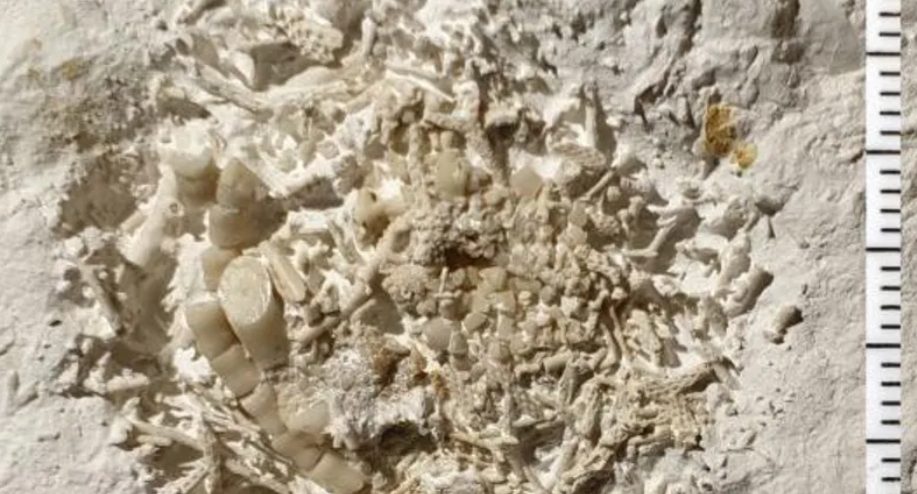
According to the Museum of East Zealand, a piece of fossilized vomit dating back to when dinosaurs roamed the Earth has been discovered in Denmark. The find was made by a local amateur fossil hunter, Peter Bennicke, who found some unusual fragments on the Cliffs of Stevns, a UNESCO-listed site south of Copenhagen. While out on a walk, Bennicke uncovered fragments embedded in a piece of chalk, which turned out to be pieces of sea lily.
He took the fragments to the museum for examination, which dated the vomit to the end of the Cretaceous era, approximately 66 million years ago.
Ancient vomit reveals ancient diet
Experts determined that the vomit is made up of at least two different species of sea lily, likely eaten by a fish that regurgitated the parts it could not digest.
This type of find is considered very important when reconstructing past ecosystems because it provides crucial information about which animals were eaten by which,” the museum said in a press release on Monday. Paleontologist Jesper Milan hailed the discovery as “truly an unusual find,” adding that it helps explain the relationships in the prehistoric food chain. “Sea lilies are not a particularly nutritious diet, as they consist mainly of calcareous plates held together by a few soft parts,” he said.
“But here is an animal, probably some kind of fish, that 66 million years ago ate sea lilies that lived at the bottom of the Cretaceous sea and regurgitated the skeletal parts.”