

Warren Buffett is widely regarded as one of the most successful investors in history. With a net worth of over $72 billion, he’s consistently listed among the richest people on the planet. Known for his disciplined approach to value investing, Buffett’s advice carries serious weight whenever he chooses to share it.
One of his most frequently cited pieces of wisdom revolves around an investment opportunity that’s available to everyone, no matter their background or bank balance. In fact, according to Buffett, it’s something you can’t put too much money or effort into.
So, what’s the one investment he believes is a no-brainer?
It’s yourself.
Why Buffett says investing in yourself is the smartest move
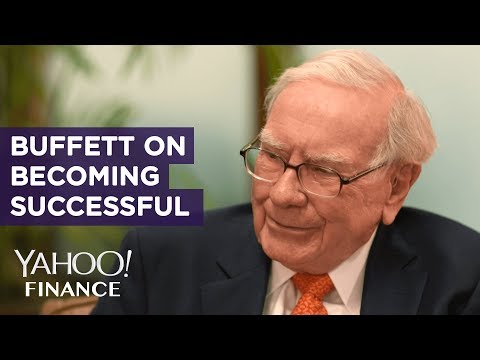
In numerous public appearances and shareholder meetings over the years, Buffett has consistently said that investing in yourself is the single best move anyone can make. As he told students at a 2017 Columbia Business School event, “By far the best investment you can make is in yourself.”
He believes that improving your own skills, health, and mindset is the single smartest way to build a better life — financially, emotionally, and socially. As he’s often explained, the knowledge and abilities you develop are assets that can never be taken from you. They appreciate over time and compound just like money, but even more powerfully.
In other words, no market crash, no economic downturn, and no outside force can steal the value you build inside yourself.
Four key ways Buffett recommends investing in yourself
Buffett doesn’t just leave it at a high-level idea — he gets specific about how to do it. Here are four of the most important ways he’s said to invest in yourself:
1. Master communication skills
Buffett has been crystal clear about this in multiple interviews: learning how to communicate effectively can change your life. He’s told business students that improving their writing and speaking skills alone could increase their professional value by at least 50 percent.
He’s also been known to joke that if you can’t communicate, “it’s like winking at a girl in the dark — nothing happens.”
Buffett has spoken publicly about taking a Dale Carnegie course early in his life to improve his speaking skills, which he credits as one of the most valuable things he ever did. He emphasizes that if you can clearly share your ideas, influence others, and build strong relationships, you’ll have a huge advantage no matter what field you’re in.
2. Take care of your body and mind
Buffett uses a well-known metaphor here. He says if you were given one car for your entire life, you would treat it like a treasure — maintaining it carefully, fixing every scratch, and reading the manual cover to cover.
He then applies it to health: you only get one mind and one body, and you can’t wait until you’re 50 to start taking care of them.
The takeaway? Start taking care of your health early. Exercise, eat well, sleep enough, and manage your stress. Psychology research consistently supports this — a healthy body and mind are your foundation for success over the long haul. Studies show that physical health is closely linked to cognitive performance, emotional regulation, and resilience.
3. Choose your influences wisely
Buffett stresses that the people you surround yourself with can shape your entire future. At a Berkshire Hathaway shareholder meeting, he advised: “Pick out associates whose behavior is better than yours and you’ll drift in that direction.”
He also says your choice of spouse is probably the single most important decision you’ll ever make. Choosing a life partner who challenges and inspires you can make all the difference.
This aligns well with what psychology tells us about social influence. Research on behavioral contagion shows that the habits, attitudes, and even emotional states of the people closest to us have a measurable impact on our own behavior. Your environment matters — surround yourself with people who make you better.
4. Have the right heroes
Throughout his career, Buffett has always emphasized the importance of having role models. He recommends picking a few people you admire and consciously trying to learn from them — how they think, how they act, and how they handle challenges.
But he also gives a warning: pick very carefully who you want to emulate. Not all successful people are worth following, and not all paths lead to a good place.
A surprising definition of success
Beyond money, Buffett has a very different view of what real success looks like.
As he’s said in several interviews: “If you get to be 65 or 70, and the people you want to have love you actually do love you, you are a success.”
In his eyes, no amount of wealth, awards, or fame matters if you’re not surrounded by people who genuinely care about you. It’s a humbling reminder that personal relationships and character are more important than any investment account balance.
What about financial investing?
When it comes to actual money investments, Buffett still keeps things simple. He has famously recommended that most people put 90% of their money into a low-cost S&P 500 index fund and 10% into short-term government bonds.
He warns that many people get caught up trying to “move around” too much — trading constantly, chasing hot stocks, reacting to news. He compares it to buying a farm or an apartment: you wouldn’t check its price every day or sell it every week.
His advice? Buy great businesses (or a simple index fund) and hold them. Let time and compounding do the heavy lifting.
Final thoughts
It’s easy to assume that Warren Buffett’s biggest advice would involve complex stock picks or secret investing formulas. But the truth is much simpler — and much more powerful.
The best thing you can invest in isn’t a stock, a house, or a business. It’s you.
Your skills, your health, your relationships, and your mindset — these are the assets that compound over a lifetime and can never be taken away. Whether you’re 20 or 60, the research from psychology and Buffett’s own lived experience point in the same direction: the returns on self-investment far outpace anything the market can offer.


