
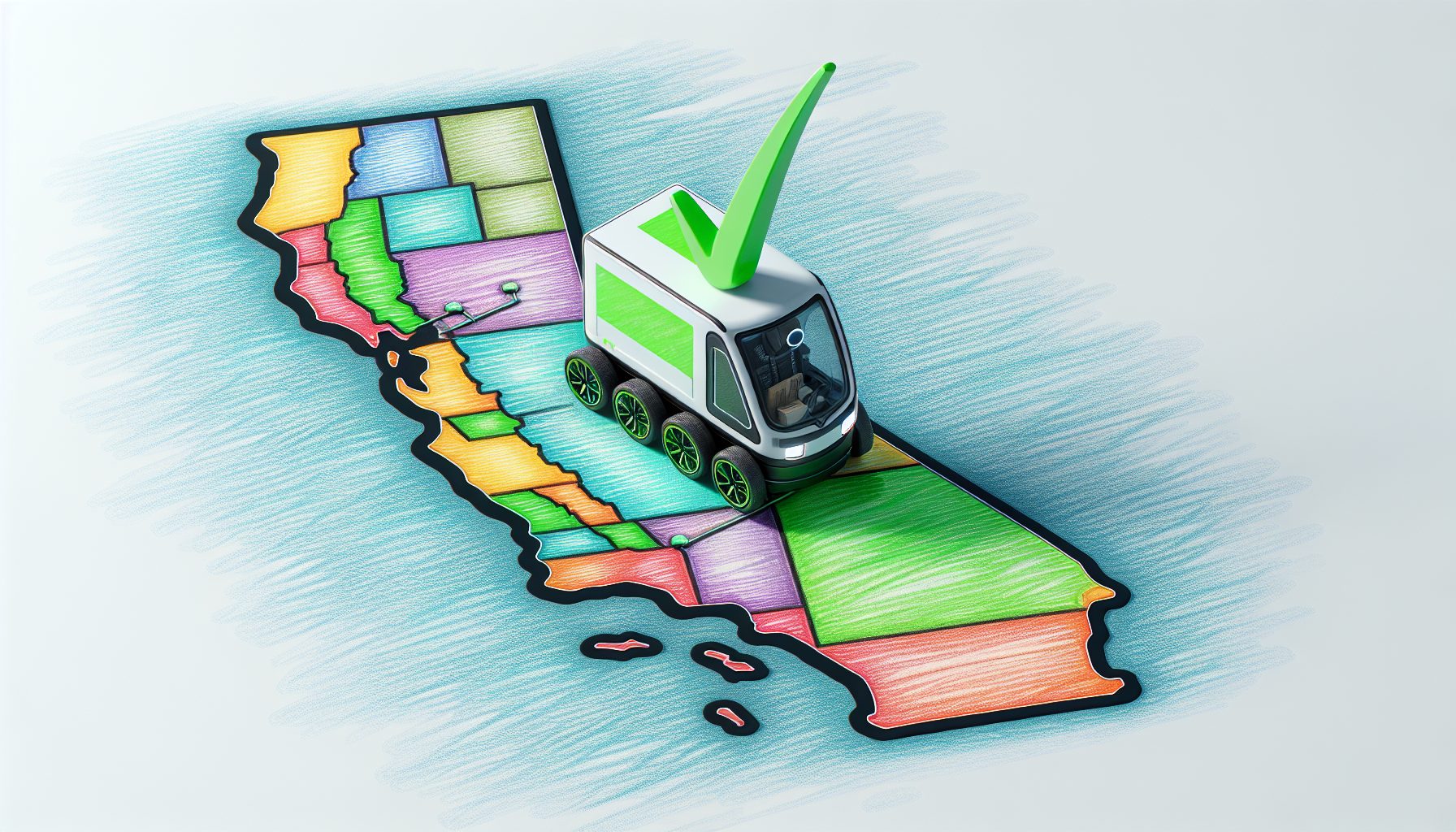
Nuro, a Californian autonomous delivery venture, has recently won approval to start testing its innovative, third-generation R3 autonomous delivery vehicles in multiple Bay Area cities. Sanctioned by the California Department of Motor Vehicles, this approval represents a key milestone in Nuro’s quest to reshape the delivery sector using autonomous technology.
The R3 models, built specifically for autonomous delivery tasks, lack regular car features such as seats, windows, and steering wheels. Instead, they come equipped with climate-controlled storage compartments and an advanced system of sensors for navigation. The vehicles are pure electric, capping their speeds at 25 mph for safety considerations.
Despite financial challenges that led to a pause in large-scale manufacturing and some job cuts, Nuro has maintained its partnership with Uber Eats, continuing its focus on refining its new AI technology.
Nuro’s autonomous delivery vehicles testing in California
The company is optimistic about future scalability once market conditions improve, with ongoing investments in its R&D.
Nuro is presently developing software and hardware that facilitate autonomous driving in a Level 4 environment, which allows for driverless operation under specific conditions. As part of its ongoing research, Nuro is continually optimizing the vehicle’s sensor suite to enhance detection and navigational accuracy.
Plans are currently underway to deploy a compact fleet of R3s in several cities including the Bay Area and Houston, despite the recent suspension of a manufacturing agreement. These new vehicles can reach speeds up to 45 mph, and Nuro aims to introduce a limited number of these improved models in the coming months.
Driven by advances in AI at the corporate and industry levels, Nuro employs large AI models capable of multitasking, enhancing both performance and efficiency. This presents the potential for future scalability, although this may necessitate a new manufacturing partner if Nuro desires to expand its operations.


