
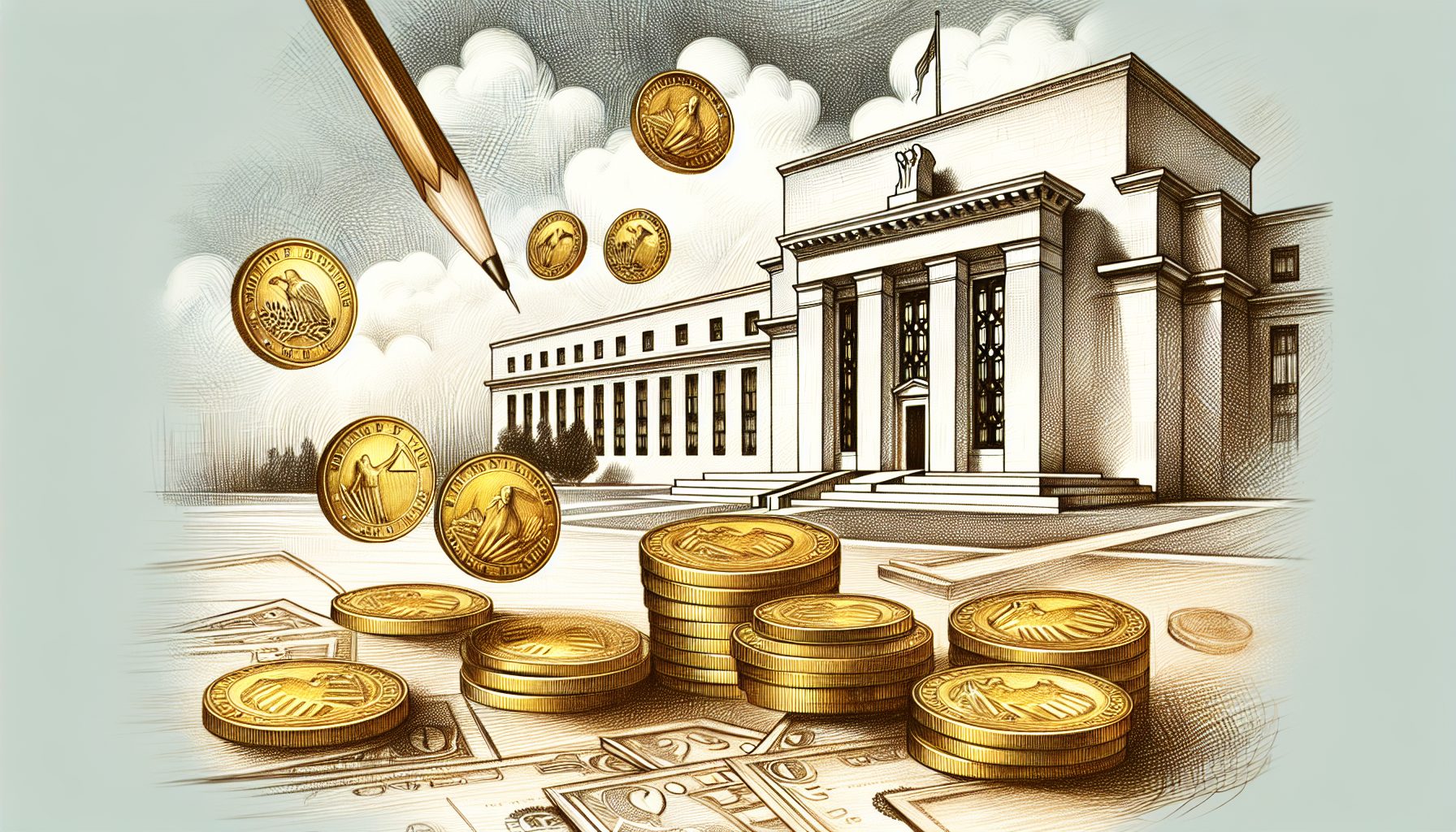
On March 21, 2024, gold prices experienced a significant hike, reaching unprecedented levels due to the rate cuts introduced by the Federal Reserve.
The rise in gold prices was mainly due to investors seeking safer investments amid economic instability. This shift was triggered by the Federal Reserve’s decision to decrease interest rates, unintentionally encouraging an investment rush into gold.
Federal Reserve maintained existing regulations — led to predictions of a steady financial year
The Federal Reserve’s maintaining of existing regulations on March 20, 2024, led to predictions of a steady financial year. Investors maintained optimism, hoping for a profitable year fostered by stability and minimal turbulence.
International market performance measures such as the FTSE 100, DAX 40, and S&P 500 indicated positive conditions prior to the Federal Open Market Committee (FOMC) meeting. Investors kept a keen eye on currency exchange rates, their potential economic impacts, and the Japanese yen’s value against the US Dollar, Euro, and British Pound.
Despite the Bank of Japan moving away from negative rates, the US dollar strengthened, resulting in a depreciation in its worth on March 19, 2024. This did not deter Japan’s export sector, which continued to thrive robustly.
On the commodities front, gold outperformed other commodities like crude oil and natural gas. Despite erratic weather conditions, the agriculture sector saw mixed trading, with coffee prices reaching a two-year high and cotton prices showing resilience.
Digital currencies like Bitcoin and Ethereum maintained an upward trend.
By the end of the first quarter in 2024, the overall market cap of cryptocurrencies globally had increased sharply, indicating the increasing acceptance and integration of digital currencies.
Market participants keenly observe global events like the Bank of England’s Interest Rate Decision and MPC Meeting Minutes, as these can significantly influence market sentiment and investment decisions.
The Federal Reserve’s dovish stance, reflected in its monetary policy decisions, continues to shape market movements. These movements underline the importance of closely following central bank actions, as they can heavily influence global financial markets and economic outlook.
Investors will likely keep watchful of future policy directions, adjusting their market strategies and asset allocations accordingly. With the rapidly changing global environment, understanding the complex interdependencies and the role of central banks becomes paramount.
Ultimately, the Federal Reserve’s dovish stance can present both challenges and opportunities. It is key for investors to navigate these market fluctuations and make informed decisions while maintaining a long-term perspective and a well-diversified portfolio.


