
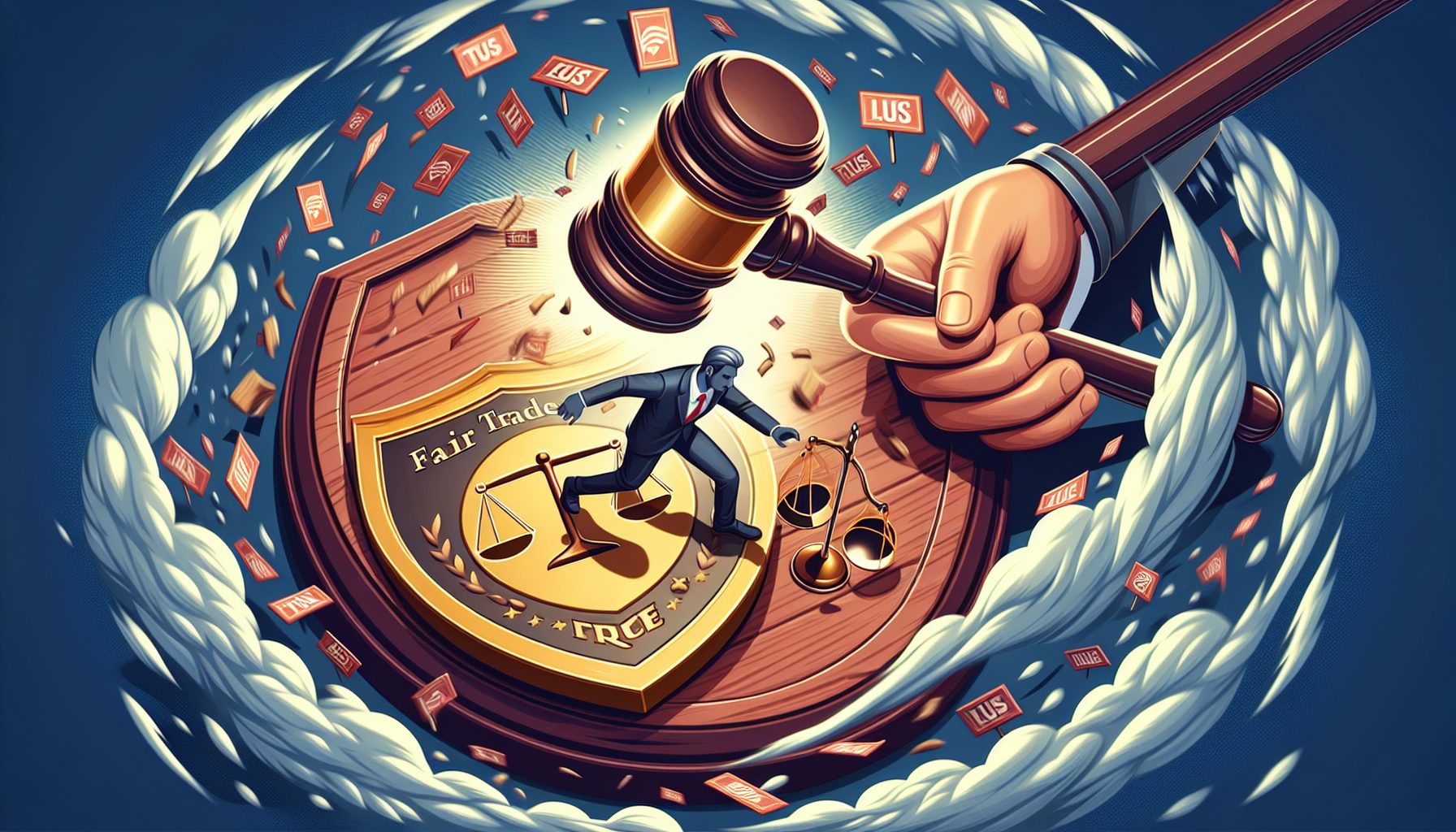
The Federal Trade Commission (FTC) is currently dealing with multiple legal challenges from corporations regarding its enforcement methods, according to recent reports. High profile issues have arisen involving firms such as Ryan LLC and the US Chamber of Commerce following a halt in implementation by a Texas federal judge of a new FTC rule. The companies argue that the FTC has excessively imposed on their business operations.
These corporations also take issue with the FTC’s newly appointed chair, Lina Khan, accusing her of having a biased stance against big corporations, thereby influencing the commission’s enforcement policies. Despite these allegations, Khan asserts that the FTC will continue to address corporate monopolies, anticompetitive practices, and customer exploitation.
Kroger, the grocery giant, recently filed a lawsuit against the FTC, saying that the FTC has violated the US constitution by obstructing its proposed merger with rival Albertson’s. This case has sparked debate over the FTC’s enforcement capabilities and has broader implications for future market regulatory practices.
Lina Khan’s regulatory stance has met significant opposition, with recent Supreme Court rulings diminishing the power of regulatory commissions.
FTC enforcement tactics under corporate scrutiny
This setback has led to increasing legal tussles that may reshape regulatory norms, tipping the corporate balance of power. Khan’s commitment to consumer protection is being seriously tested as she faces these challenges.
The proposed merger between Kroger and Albertson’s faces two separate challenges from the FTC. These challenges are causing tension-filled standoffs, with the future of the merger held in balance. This situation raises concerns among stakeholders looking forward to a competitive supermarket industry.
Finally, the FTC’s proposed prohibition on a significant portion of noncompete agreements is facing stiff resistance, particularly from businesses in Texas, Florida, and Pennsylvania. This issue, which could potentially alter the landscape of many industries, is set to be reviewed by the US Supreme Court—a decision that could significantly shift the balance of power between employers and their workforce.


