
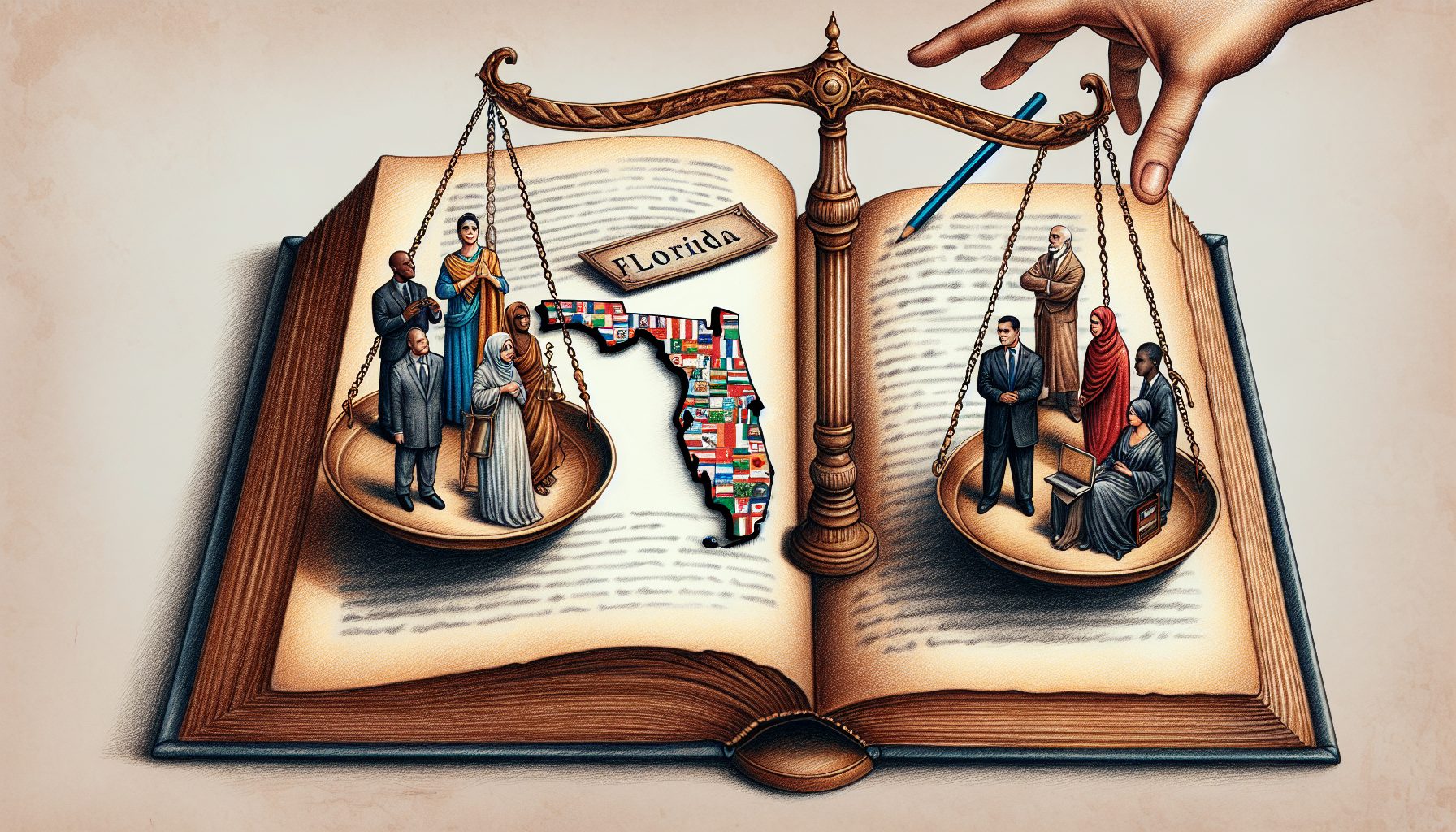
A federal appeals court has unanimously rescinded a controversial Florida law prohibiting businesses from implementing diversity and inclusion trainings. The ruling, declared on Monday, upholds a temporary injunction from a lower court. This decision marks an essential step forward for equality and diversity in the workplace. The law, widely known as the “Stop WOKE Act”, has been at the center of intense debate within the state.
Backed by Governor Ron DeSantis, the Act aims to prevent the teaching of critical race theory and related concepts in both educational and workplace environments. Advocates for the law argue that it encourages unity by avoiding divisive subjects, while detractors assert that it confines freedom of speech and stifles crucial conversations about racial and social justice.
The future of this bill is unclear, as are its implications for the increasingly partisan political climate in Florida and beyond. The federal appeal court’s three-judge panel stated that the First Amendment shields the freedom of speech from governmental interference, even concerning divergent beliefs on significant societal matters.
Open debate for trainings on diversity and inclusion in Florida
Public officials are subjected to the same laws and regulations as ordinary citizens. The judges highlighted the importance of open debate on these topics, without fear of repercussions. They also differentiated between an individual’s right to express personal opinions and the state’s obligation to maintain neutrality.
On the one hand, Governor DeSantis and other officials argue that the Act is designed to counter perceived bias in educational and workplace environments by prohibiting the promotion of “discriminatory concepts”. On the other hand, critics fear it could whitewash history and hinder open dialogue about systemic racism and racial inequality.
Currently, ongoing discussions about the role of educators in shaping discourse about racial disparities and the Act’s overarching impact on inclusiveness and diversity in education and workplaces continue. The future of the Act now hangs in the balance, following the ruling.
Amid this legal showdown, the businesses opposing the Act are trying to mobilize public opinion against the law. Legal proceedings against the Act, initiated by three businesses in June, led to a federal judge declaring that it violated both the First and 14th Amendments, owing to unclear restrictions and infringement on freedom of speech.
The legal battle’s developments highlight not just the importance of free speech but also the need for clarity and fairness in lawmaking and enforcement. Finally, the lawyer for Protect Democracy, the nonprofit organization representing the challenging businesses, hailed the ruling as a victory for workplace freedom of speech and emphasized its significance for the American corporate sector.


