

Additional Paid-In Capital (APIC) is an important financial concept representing the extra money investors pay above the par value of a company’s shares during stock offerings. Understanding APIC helps investors and companies alike grasp how equity financing works and its impact on financial statements.
This article will explore the definition, role, accounting practices, benefits, calculation methods, and the overall effect of APIC on company valuation.
Key Takeaways
- APIC is the money paid by investors above the par value of shares.
- It helps companies raise funds without increasing fixed costs.
- APIC is recorded in the shareholders’ equity section of the balance sheet.
- Calculating APIC involves subtracting the par value from the sale price of shares.
- APIC can boost investor confidence and financial flexibility for companies.
Understanding Paid-In Capital
Definition of Paid-In Capital
Paid-in capital is the total amount of money shareholders invest in a company in exchange for stock. This includes the par value of the shares and any extra amount paid above that value. For example, if a company has shares with a par value of $1 and sells them for $5, the paid-in capital is $5 per share.
Components of Paid-In Capital
Paid-in capital has two main parts:
- Par Value: This is the minimum price set for a share, often very low, like $0.01.
- Additional Paid-In Capital (APIC): The extra money investors pay above the par value.
| Component | Description |
|---|---|
| Par Value | Minimum price of a share |
| Additional Paid-In Capital | Extra amount paid by investors |
Importance in Financial Statements
Paid-in capital is crucial for understanding a company’s financial health. It shows how much money has been raised from investors, which can be used for growth and operations. This information is found in the shareholders’ equity section of the balance sheet.
Understanding paid-in capital helps me see how much support a company has from its investors. It’s a key indicator of financial strength and stability.
The Role of Additional Paid-In Capital

Definition and Explanation
Additional Paid-In Capital (APIC) is the money investors pay for shares above their par value. When a company sells its stock, the amount over the minimum price set (the par value) goes into APIC. This extra capital can be crucial for a company’s growth.
How It Differs from Paid-In Capital
While paid-in capital includes the par value and APIC, APIC focuses only on the excess amount. Here’s a quick breakdown:
| Type | Includes |
|---|---|
| Paid-In Capital | Par Value + APIC |
| Additional Paid-In Capital | Only the amount above Par Value |
Examples of Additional Paid-In Capital
- Initial Public Offering (IPO): When a company goes public, it might sell shares for $10 each, but the par value is only $1. The APIC would be $9 per share.
- Secondary Offerings: If a company issues more shares at a higher price than the par value, the difference again goes into APIC.
- Stock Options: When employees exercise stock options, any amount paid above the par value is recorded as APIC.
Additional Paid-In Capital is a vital part of a company’s financial health, providing funds that can be used for various purposes, like expansion or paying off debts.
Understanding APIC helps me see how companies can leverage their stock sales to strengthen their financial position and support their growth strategies. It’s not just about the money received; it’s about how that money can benefit the company and its stakeholders, aligning with the business roundtable’s stakeholder pledge to lead for the benefit of all stakeholders.
Accounting for Additional Paid-In Capital

Recording on the Balance Sheet
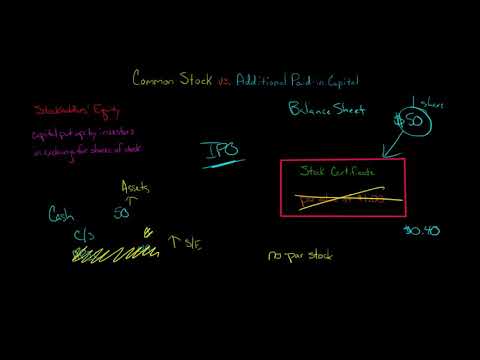
When a company issues shares, it records the money received in its balance sheet. This includes the par value and any additional paid-in capital (APIC). The par value is usually small, while APIC represents the extra money investors pay above this value. For example, if a share has a par value of $1 and is sold for $5, the APIC would be $4. This is how it looks on the balance sheet:
| Item | Amount |
|---|---|
| Par Value of Shares Issued | $1,000,000 |
| Additional Paid-In Capital | $4,000,000 |
| Total Paid-In Capital | $5,000,000 |
Impact on Shareholders’ Equity
APIC is part of shareholders’ equity, which shows how much the company is worth to its owners. It helps to strengthen the company’s financial position. Investors who see a high APIC might feel more confident about the company’s future. This indicates that the company has raised extra funds without increasing its debt.
Common Accounting Mistakes
- Not Separating APIC from Par Value: It’s important to clearly show APIC and par value separately on the balance sheet.
- Miscalculating APIC: Always double-check the calculation of APIC to ensure accuracy. Remember, APIC = (Issuance Price – Par Value) × Number of Shares.
- Ignoring Changes in APIC: If a company issues more shares or repurchases them, it can affect the APIC. Keeping track of these changes is crucial for accurate reporting.
Understanding how to account for additional paid-in capital is essential for anyone involved in finance. It not only reflects a company’s ability to raise funds but also impacts investor perception and overall financial health.
Accounting for additional paid-in capital is a key part of financial reporting. It shows how much investors are willing to pay above the par value of shares, which can significantly impact a company’s equity and financial stability.
Benefits of Additional Paid-In Capital

Financial Flexibility
Additional paid-in capital (APIC) gives a company more freedom to use its funds. This means the company can:
- Pay off debts
- Invest in new projects
- Handle unexpected costs
This flexibility can be crucial for a company’s growth and stability.
Risk Mitigation
APIC acts as a safety net. If a company faces losses, this extra capital can help cover those losses without affecting the company’s operations. It provides a buffer that can protect against financial difficulties.
Investor Confidence
When a company has a strong APIC, it shows investors that the company is financially healthy. This can lead to:
- Increased investment interest
- Higher stock prices
- Better market reputation
In my experience, companies with solid additional paid-in capital often attract more investors, which can lead to long-term success.
Overall, APIC is not just a number on a balance sheet; it represents opportunities and security for a company and its investors.
Calculating Additional Paid-In Capital
APIC Formula
To figure out the Additional Paid-In Capital (APIC), I use a simple formula:
APIC = (Issuance Price – Par Value) × Number of Shares Issued.
This formula helps me understand how much extra money investors are willing to pay over the par value of the shares.
Step-by-Step Calculation
Calculating APIC is straightforward. Here’s how I do it:
- Find the par value of the shares. This is usually a small amount, like $0.01.
- Subtract the par value from the price at which the shares were sold.
- Multiply the result by the total number of shares issued.
For example, if the shares were sold for $10 each, and the par value is $0.01, and 1,000 shares were issued, the calculation would look like this:
| Issuance Price | Par Value | Shares Issued | APIC Calculation |
|---|---|---|---|
| $10 | $0.01 | 1,000 | ($10 – $0.01) × 1,000 = $9,990 |
Common Pitfalls in Calculation
When calculating APIC, I keep an eye out for these common mistakes:
- Forgetting to use the correct par value.
- Miscounting the number of shares issued.
- Confusing APIC with total paid-in capital.
Understanding how to calculate APIC is crucial for evaluating a company’s financial health. It shows how much investors believe in the company’s future potential.
By following these steps, I can accurately determine the additional paid-in capital, which is an important part of a company’s financial picture.
Impact of Additional Paid-In Capital on Company Valuation
Influence on Stock Prices
When a company has a strong additional paid-in capital (APIC), it can positively influence its stock prices. Investors often see high APIC as a sign of financial health. This can lead to increased demand for the stock, driving prices up. Here are a few reasons why APIC matters:
- It shows that investors are willing to pay more than the par value for shares.
- A higher APIC can indicate that the company is growing and attracting more investment.
- It provides a cushion against potential losses, making the company more stable.
Effect on Market Perception
The market often views companies with significant APIC as more trustworthy. This perception can lead to:
- Increased investor interest.
- Better credit ratings, which can lower borrowing costs.
- Enhanced reputation in the industry.
Long-Term Financial Health
Having a solid APIC can contribute to a company’s long-term financial health. It allows companies to:
- Fund new projects without taking on debt.
- Maintain flexibility in financial planning.
- Build a stronger balance sheet, which can attract more investors.
In summary, a robust additional paid-in capital can significantly impact a company’s valuation by enhancing its stock prices, improving market perception, and ensuring long-term financial stability.
Overall, understanding the role of APIC is crucial for both investors and companies alike. It’s not just about the money; it’s about the confidence and opportunities it brings.
Comparing Additional Paid-In Capital and Contributed Capital

Key Differences
Significant differences exist when considering additional paid-in capital (APIC) and contributed capital. Contributed capital is the total amount of money shareholders have given to a company in exchange for its shares. This includes the par value of the shares and any extra amount paid above that. On the other hand, APIC only refers to the amount paid over the par value.
Reporting on Financial Statements
Both APIC and contributed capital are shown in the shareholders’ equity section of the balance sheet, but they are reported differently:
- Contributed Capital: This is the total of common stock and APIC.
- Additional Paid-In Capital: This is listed as a separate line item below common stock.
Implications for Investors
Understanding these differences is crucial for investors. Here are a few points to consider:
- Investment Value: APIC shows how much investors are willing to pay above the nominal value of shares.
- Financial Health: A higher APIC can indicate strong investor confidence in the company.
- Risk Assessment: Knowing the difference helps evaluate the company’s financial stability.
In summary, while both terms relate to shareholder contributions, they serve different purposes in financial reporting and analysis. Understanding these can help me make better investment decisions.
Summary Table
| Aspect | Contributed Capital | Additional Paid-In Capital |
|---|---|---|
| Definition | Total value paid for shares | Amount paid over par value |
| Reporting | Combined with common stock | Listed separately |
| Importance for Investors | Overall investment value | Indicates investor confidence |
By grasping these concepts, I can better navigate the financial landscape and make informed choices about my investments.
Conclusion
In summary, Additional Paid-in Capital (APIC) is vital to a company’s financial health. It represents the extra money investors are willing to pay beyond the par value of shares during an initial public offering (IPO). This additional capital boosts the company’s equity and provides a safety net against potential losses. Unlike traditional loans, APIC does not require repayment or interest, allowing companies to use these funds freely for growth and development. Understanding APIC is essential for investors and companies, as it highlights a business’s financial strength and potential.
Frequently Asked Questions
What is Additional Paid-In Capital (APIC)?
Additional Paid-In Capital (APIC) is the money investors pay for shares above their basic value, known as par value. It helps companies raise extra cash when they sell stock.
How is APIC different from Paid-In Capital?
Paid-In Capital includes all the money shareholders give to a company when they buy stock, while APIC specifically refers to the amount paid over the par value.
Why is Additional Paid-In Capital important?
APIC is important because it provides companies with funds that can be used for growth and helps protect against losses.
How do companies record Additional Paid-In Capital?
When a company sells shares, it records APIC on its balance sheet under shareholders’ equity, showing how much extra money was received beyond the par value.
Can Additional Paid-In Capital be considered an asset?
No, APIC is not an asset. It is part of shareholders’ equity, representing the owners’ claim on the company’s assets.
What are some common mistakes in calculating APIC?
Common mistakes include forgetting to subtract the par value from the sale price or not accounting for all shares issued.
Featured Image Credit: Photo by Antoni Shkraba; Pexels


